
Welcome to theDanielPlace.org
Finding Truth, Faith, Hope & Love Through a Personal Relationship With God
Banking & Finance Mountain


Banking & Finance Mountain Overview

From the beginning, God told people they could not serve God and money. It's one or the other. This is because money is one of the evil systems Satan uses to control people. The world's banking systems have become corrupted by their integration with the Mountains of Government and Multinational Corporations.
Today, money deposited in banks doesn't truly belong to the depositors; in a crisis, it becomes an asset and an equity share of the bank itself, thanks to the Dodd-Frank Act passed after the 2008 financial meltdown. In some areas, depositors are charged interest for the privilege of making deposits, and banks may cancel depositor relationships at any time without explanation or recourse. This is not how God directed money to be handled. It is not that money in itself is evil, but rather that God understood the riches of this world would be incredibly enticing, and evil forces would use it to ensnare people seeking power, influence, security, and self-gratification to commit evil acts - like trafficking, enslaving, or exploiting others.
This Banking-Finance Section highlights how people currently focus on obtaining money for food, shelter, education, and living expenses to achieve happiness, pleasure, and beyond. It will emphasize putting God first and receiving blessings through a personal relationship with Him.
Ancient Jewish vs. Modern Financial Practices

In ancient Israel, financial transactions were closely connected to religious and social laws. The Torah set forth guidelines to prevent economic oppression and to promote stability among the Jewish people. A significant practice was the Year of Jubilee, which occurred every 50 years. During this time, all land was returned to its original owners, debts were canceled, and contracts of indentured servitude were nullified, freeing individuals from long-term financial bondage.
Instead of selling properties permanently, land transactions operated as long-term leases. A buyer would make a lump-sum payment at the beginning of the agreement, gaining full control of the land and its resources. However, during the Year of Jubilee, the land reverted to the original family, ensuring generational stability.
Loans among Jews were structured to be interest-free, as charging interest to fellow Israelites was prohibited by Torah law. In contrast, when lending to Gentiles, different financial arrangements became applicable, allowing for interest-bearing loans. Additionally, economic policies shifted when Israel was conquered by foreign empires, such as Babylon, Persia, or Rome, which imposed their own financial systems.
As you read the next panel explaining how modern nations manage national and international banking, consider how the ancient approach to managing finances compares to today's financial and banking system. Is the current system more or less aligned with God's desire to protect people than the ancient one from which it evolved? What changes could be made to make it more focused on the well-being of individuals?
World Reserve Currency and Global Finance

In today’s financial landscape, nations maintain their own currencies for domestic transactions, but international trade and financial settlements often rely on World Reserve Currencies—a select group of widely accepted currencies that serve as the backbone of global commerce. These reserve currencies are used by governments, central banks, and financial institutions to facilitate cross-border transactions, stabilize economies, and manage international reserves.
In approaching commerce between nations, each country would like settlements to be made in their own currency, of which they have plenty, instead of in the other country's currency, which they may have little of, depending on their trade balance with that country. Therefore, certain currencies have been selected as the primary currencies for settling international transactions. These are called World Reserve Currencies.
The U.S. Dollar is the dominant World Reserve Currency, accounting for the majority of global trade and foreign exchange reserves. Currently, the U.S. Dollar is one of the world's reserve currencies (WRC). When a currency loses its status as a WRC, its foreign exchange can be disrupted, e.g., what it can import and export.
Today, other major currencies are the Euro, Japanese Yen, British Pound, Chinese Renminbi (Yuan), Swiss Franc, Canadian Dollar, and Australian Dollar. These currencies are widely accepted for international transactions and are used by central banks to maintain economic stability.
When a country lacks sufficient funds in another country's currency, it can exchange its currency for the other currency on the foreign exchange market, also known as the FOREX Market, and then the settlement is managed through the International Bank for Settlements, which oversees currency exchanges and cross-border transactions.
The FOREX (Foreign Exchange) market facilitates the daily trading of national currencies, ensuring liquidity and stability of exchange rates. On average, around $6.6 trillion is traded daily on the foreign exchange (FOREX) market, enabling businesses and governments to convert local currencies into reserve currencies for global trade.
Major currencies interact with the World Reserve Currency system in several ways:
-
International Trade: Many commodities, including oil and gold, are priced in U.S. Dollars, requiring countries to hold dollar reserves for purchasing goods on global markets.
-
Foreign Exchange Reserves: Central banks hold reserve currencies to stabilize their own economies and manage exchange rate fluctuations.
-
Debt and Lending: Nations often issue bonds denominated in reserve currencies, allowing for lower interest rates and greater investor confidence.
-
Currency Pegging: Some countries peg their local currencies to reserve currencies to ensure stability and attract foreign investment.
While each nation operates its own currency for domestic transactions, the World Reserve Currency system ensures smooth global financial operations, reducing the risks associated with fluctuating exchange rates and economic instability. The nations with WRC status are privileged because they can PRINT new money to purchase goods and services whenever they want to.
Most Western alliance nations have strong currencies and are hostile towards non-democratic societies, especially Russia, China, Brazil, India, Venezuela, most of the third world, and the Islamic Middle Eastern countries, except for Saudi Arabia (which until 2025 agreed to sell oil to the world and make settlements in U.S. Dollars. Nations that feel the USA controls their foreign exchange have formed the BRICS alliance so they can trade and do settlements in currencies other than the U.S. dollar. As the value of the U.S. dollar declines, these are becoming more attractive currencies in which to conduct international trade among nations.
IMF

The International Monetary Fund (IMF), a global financial institution, recognizes eight major reserve currencies. These currencies are crucial because they facilitate cross-border transactions, reduce exchange rate risks, and enhance economic stability. The U.S. dollar has been the dominant reserve currency since World War II, supported by its global use in trade and investment. It is involved in 90% of foreign exchange, 85% of spot, forward, and swap markets, and 60% of officially disclosed foreign reserves, although this has declining.
Many countries, including the BRICS (Brazil, Russia, India, China, South Africa (and other)) countries, are working to undermine the U.S. dollar or offer an alternative, such as the World Reserve Currency. This would prevent the U.S. from applying sanctions on other countries at its whim for geo-political and foreign policy purposes. The BRICS alliance expanded substantially in 2023. The Chinese renminbi is now used as a world exchange currency as well, particularly by BRICS countries.
How Reserve Currencies Are Used: When countries trade goods and services, they often use reserve currencies for invoicing. For example, oil transactions are typically priced in U.S. dollars. So any other nation must have dollars in order to buy oil, which means that they must sell their goods to the U.S. or someone else who will pay them in U.S. dollars, so they have come to purchase things that must be paid for in U.S. dollars.
Foreign Exchange Reserves: Central banks hold reserve currencies to stabilize their currencies and manage exchange rate fluctuations.
Investment and Bonds: Foreign governments invest in U.S. Treasury bonds and other assets denominated in reserve currencies.
Settling International Debts: Countries settle debts and obligations using reserve currencies, ensuring smooth cross-border payments made through the International Bank of Settlements (IBS).
Role of the IMF: The IMF monitors the international monetary system and encourages cooperation among countries. It provides liquidity to member countries in times of crisis through its reserve asset called the Special Drawing Rights (SDR), which is a basket of major reserve currencies.
Crypto Currency & Tokens

Cryptocurrencies were created to circumvent the ability of banks and governments to track, control, and block the use of funds or expenditures. Bitcoin (BTC) and Ethereum (ETH) are the most well-known cryptocurrencies today, but there are many others, including stablecoins.
Three main factors influence the value of these cryptocurrencies: 1) supply, 2) demand, and 3) confidence in them as assets. Confidence in cryptocurrencies refers to the belief that they hold value and can be converted into traditional (fiat) currencies when necessary or, in some cases (such as stablecoins), used directly to purchase goods and services.
This confidence is similar to the trust people place in printed currencies, such as the U.S. dollar, which lacks intrinsic value. However, unlike fiat currencies, cryptocurrencies cannot be created by governments printing more money, nor do they contribute to inflation when they are generated. Their appeal lies in their resistance to government oversight and control. As central banks around the world transition to digital currencies, consumers increasingly value the freedom from surveillance and control by governments and traditional banks.
Cryptocurrencies may become more significant as a global movement attempts to unify control over all nations and eliminate national borders.
Small Business Bias
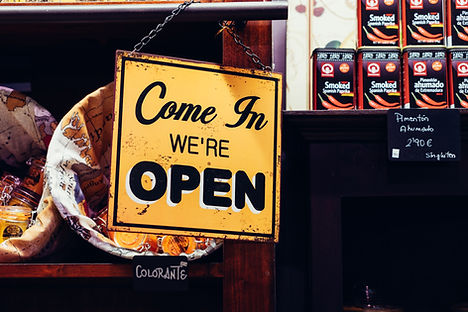
Before the COVID-19 pandemic, there were 5.6 million small businesses (with less than 250 employees each) in the USA, employing over 8 million people. During pandemic lockdowns, over 100,000 of these businesses closed and never reopened. This resulted in a net job loss of over 1.7 million fewer small business jobs.
Small businesses have historically created more new jobs than large ones. Growing market chaos, violence in urban areas, and rapidly increasing inflation have continued to stifle business recovery. Open borders and minimum wage increases are likely to reduce small business employment even further. Automation is eliminating jobs previously performed by humans in small businesses.
The Banking and Finance segment has always been biased toward favoring larger businesses. Bias against small businesses is most robust if the business is minority-owned or in troubled urban markets. Banks make it substantially easier for larger firms to receive loans and capture investment capital without putting the company's officers at personal risk for corporate financial losses, which small businesses cannot do. Many small business ventures fail due to personal financial bankruptcies.
Quality of Work Force

The government is working to eliminate jobs for unskilled workers and workers with limited skills, preparing students more poorly in high school and raising minimum wages to levels where small businesses can't afford to pay them. At the same time, the government is flooding the U.S. market with uncontrolled, uneducated individuals who do not speak English and are competing for the lowest-income jobs or are trafficked or slave workers for illegal cartels. The intent seems to be class warfare and chaos in America, with escalating violence due to a lack of law enforcement for those illegally within the USA.
Banking & Finance Mountain Summary

-
While the U.S. dollar remains dominant, its use as a political weapon is angering other countries, driving them towards BRICS. New developments, such as the rise of digital currencies and shifts in global economic power, could further alter the landscape.
-
The emergence of the Chinese renminbi (yuan) as a reserve currency alternative reflects changing dynamics and helps Islamic and developing countries to insulate themselves from U.S. political power.
-
By facilitating international transactions, reserve currencies play a crucial role in global finance. Should the U.S. lose its status as a world reserve currency due to increasing national debt, default in interest payments, or for any other reason, all U.S. imports would have to be paid for in another currency, which the U.S. cannot print out of thin air.
-
4. Trump's tariff strategy may be the answer to the massive U.S. debt, the high interest rate the U.S. must pay on it, and bringing back the Middle Class in the country.